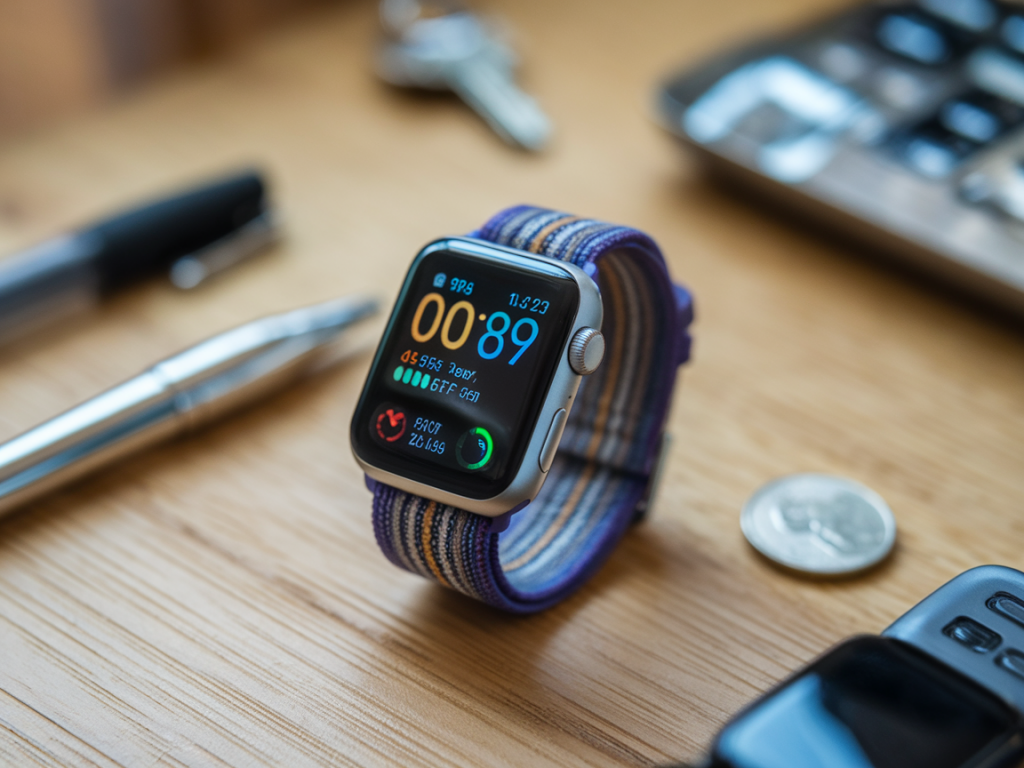
I spent a week wearing three budget-friendly smartwatches back-to-back to see which ones actually deliver on the promise of multi-day battery life without ditching useful features. I focus a lot on value products at Techtoinsider because not everyone wants — or needs — a flagship watch. What matters to most people is a device that lasts through busy workweeks, tracks basic health metrics reliably, and doesn't require constant tinkering. Here’s what I tested, how I tested it, and the real-world results you can expect.
What I tested and why
I picked three affordable smartwatches that advertise multi-day battery life and represent different approaches to balancing features and battery:
Amazfit Bip 3 Pro — a lightweight display-first smartwatch with strong battery claims.Wyze Watch 47 (2023) — value-focused, with a larger screen and solid ecosystem integration.Realme Watch 3 Pro — closer to mainstream smartwatch styling with a promise of extended endurance.I picked these because they’re widely available, priced under $100–$120 in most markets, and each has a different software/hardware trade-off that affects battery life. I wanted to see how they handle notifications, continuous heart-rate monitoring, GPS use, and simple day-to-day interactions like alarms and music controls.
Testing methodology — how I made it realistic
To get results that matter, I ran an identical usage profile on each watch. Key details:
Default display brightness set to ~60% (close to what most users use indoors and outdoors).Notifications mirrored from the same Android phone, including messaging, email, and calendar alerts — roughly 60 notifications/day.Continuous heart-rate monitoring enabled where available.Two 30–45 minute outdoor runs during the week (GPS enabled when I went for a run).Sleep tracking every night.Sporadic use of on-watch controls (music, timers, alarms).I started with full charge on Monday morning and tracked battery percentage every 12 hours using screenshots and manual logs. I repeated the cycle across three weeks, one watch per week, to remove environmental variables (temperature, my activity level) as much as possible.
Raw battery results
| Watch | Advertised Battery | Observed Battery Life (workweek profile) | Notes |
|---|
| Amazfit Bip 3 Pro | up to 14 days | 7–8 days | Bright always-on display off; GPS drains ~10–12% per 30‑min run |
| Wyze Watch 47 (2023) | up to 10 days | 5–6 days | Larger screen uses more power; decent standby |
| Realme Watch 3 Pro | up to 14 days | 6–7 days | Good mixed usage, GPS active reduced runtime |
Those observed runtimes reflect my specific setup — particularly the number of notifications and continuous HR monitoring. If you mute many notifications or rely on intermittent HR sampling instead of continuous, you'll see longer runtimes.
Real-world strengths and pain points
Here’s what actually mattered to me during the test beyond raw battery numbers.
Notification management: A watch that can display notifications without constantly lighting up the screen is a big battery saver. The Bip 3 Pro handled quick glanceability best — notifications appear cleanly and I rarely needed to tap the screen. Wyze’s larger screen is visually pleasing but woke up more often when my wrist moved, which nibbled at battery.GPS impact: Enabling GPS is by far the single biggest drain. On average, a 30–45 minute run using built-in GPS cut 10–12% on the Bip and Realme, and slightly more on the Wyze due to its brighter display and larger sensor array. If you rely on GPS for daily runs, expect to charge mid-week if you also use continuous heart-rate monitoring and get lots of notifications.Heart-rate and sleep tracking: Continuous heart-rate tracking is useful but not free. It shaved around 8–10% from the Bip and Realme over 24 hours versus intermittent sampling modes. Sleep tracking used minimal extra power; the bigger battery hit came from the heart-rate sensor and display wake-ups during the night.Software polish: Useful features that are implemented well can save you battery indirectly. For example, Wyze has quick toggles that let you dump high-power features quickly, but its firmware occasionally caused extra wake-ups. The Amazfit software felt more mature and more conservative about background tasks, which helped runtime.Charging convenience: All three charge via magnetic pads or proprietary docks. They’re quick enough (about 1.5–2 hours to full), but none used USB-C, which is annoying when you try to travel light and bring one cable for everything.Which one survived most of my real-world week?
If your definition of "survived" is getting through five full days of heavy use (lots of notifications, two GPS workouts, continuous HR, sleep tracking) without a recharge, none of these managed a full seven days consistently. But some came very close:
Amazfit Bip 3 Pro — best overall balance: It consistently reached 7–8 days under my profile when I switched off occasional always-on settings and let the watch be conservative about wake-ups. It’s not flashy, but it’s the most dependable for people who want minimal fuss. The app ecosystem is solid, and the data is reasonably accurate for day-to-day tracking.Realme Watch 3 Pro — best for looks + battery: If you want a watch that looks more like a mainstream smartwatch without sacrificing too much runtime, the Realme is the pick. It hit 6–7 days and offers slightly more refined aesthetics, but GPS and continuous HR still shorten that considerably.Wyze Watch 47 — best screen, compromise on battery: The biggest screen is excellent for reading notifications and controlling music, but that same advantage makes it the hungriest. If you prioritize display real estate and don’t mind charging mid-week, it’s a great value.Practical tips to extend battery life
From my week of hands-on testing, here are simple settings that extend runtime without seriously degrading the experience:
Turn off continuous heart-rate monitoring and use interval sampling unless you need minute-by-minute HR data.Disable GPS unless you’re actively tracking an activity; use connected GPS (phone GPS) when possible to save watch power.Lower screen brightness to 40–50% and reduce screen wake-on-raise sensitivity.Limit notification mirroring to essential apps — calendar, messages, calls — and mute social feed noise.Use scheduled do-not-disturb at night to avoid unnecessary wake-ups.What to expect when you buy
Affordable smartwatches will not beat premium models in sensors, app ecosystems, or long-term software updates. But they can be reliable daily companions that last several days between charges if you set them up intelligently. My weeklong test shows that with moderate usage, you can confidently expect 5–8 days from the best budget options — which is perfectly practical for many users.
If you want a smartwatch that genuinely hits 10+ days in real life with heavy usage, you’ll need to accept compromises: either a very basic display and limited features, or a larger physical device with a bigger battery. For most people who want notifications, basic health tracking, and occasional GPS use, the Amazfit Bip 3 Pro and Realme Watch 3 Pro are the two that struck the best balance for me during a real workweek.