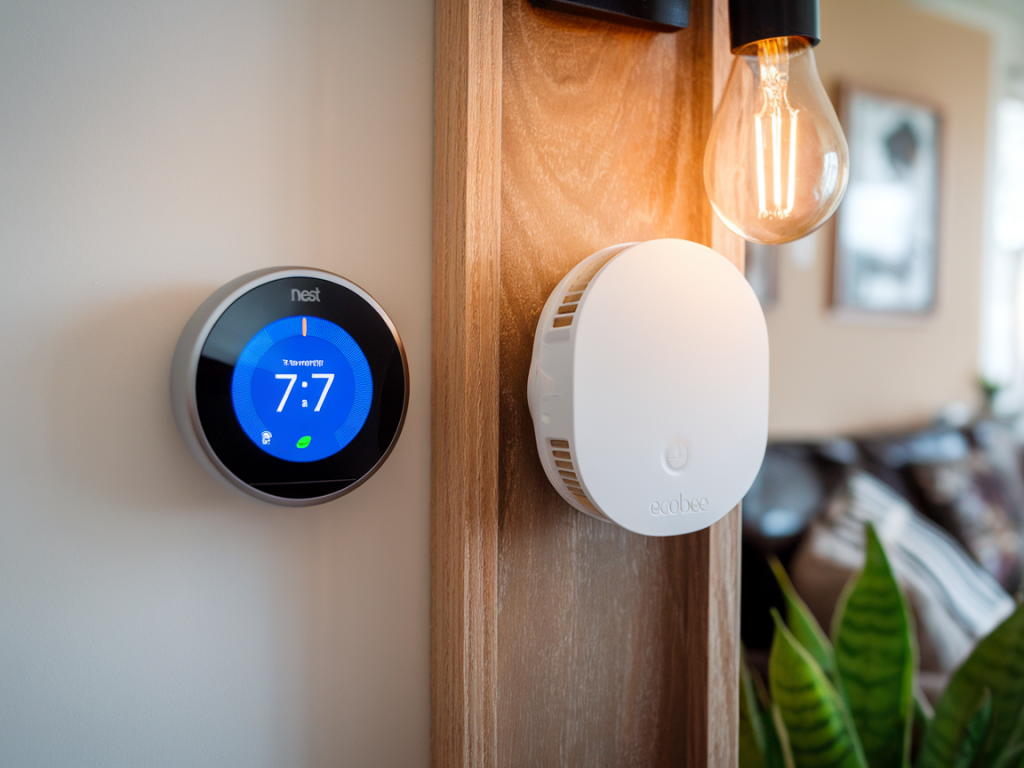
I recently spent several weeks testing a Google Nest Thermostat (the latest Nest Learning Thermostat and the more affordable Nest Thermostat) against an Ecobee (the Ecobee SmartThermostat with voice control and an Ecobee3 lite for baseline) in an older, 1920s-era house with single-pane windows, modest insulation, and a noisy but functional furnace. The key question I wanted to answer: which smart thermostat actually saves more on heating in an older home? Spoiler: the answer isn't just “which brand”; it's about sensors, installation, habits, and how each thermostat handles the quirks of legacy heating systems. Below I share hands-on observations, comparative data, and practical tips that helped me reduce heating bills during my test period.
Why older homes are a different beast
Older homes lose heat faster. Drafts, thin walls, and varying room-to-room thermal behavior mean a single thermostat reading often doesn't reflect the whole house. That matters because smart thermostats save money by avoiding unnecessary heating or by optimizing cycles — but they can only do that if they perceive the true conditions where people live.
In my house the main thermostat sits on a north-facing hallway, where temperatures tend to run lower than in rooms that get afternoon sun. That mismatch is exactly where smart thermostats with remote sensors can shine — or fail — depending on how they’re used.
How I tested: real-world, replicable checks
I used the following approach so the comparison would be meaningful for readers with similar older homes:
I installed both ecosystems in the same house, swapping out after multi-week baseline periods to avoid seasonality bias.For each thermostat I ran with and without remote sensors and with the manufacturer’s recommended settings (eco/away modes, learning enabled, etc.).I logged furnace runtime, temperature setpoints, and energy reports where available. Where direct energy data wasn’t built into the furnace, I used a smart plug on the furnace’s control transformer and cross-checked with monthly utility bills.I tested schedules vs. adaptive/learning modes and compared how geofencing, occupancy detection, and voice controls impacted behavior.Key differences that affect savings
Not all smart thermostats are equal when it comes to saving on heating in old houses. Here’s what moved the needle in my tests:
Remote sensors: Ecobee ships with (or supports) separate remote temperature/humidity/occupancy sensors. Nest offers remote sensors too but their ecosystem and behavior differ. In my house, using remote sensors to prioritize living spaces (living room, bedroom) was crucial — it prevented the furnace from overworking to hit a hallway temperature that didn’t represent occupancy zones.Algorithm vs. rules: Nest’s Learning Thermostat builds a schedule by observing your behavior and adapts HVAC cycles to reach setpoints by the scheduled time. Ecobee is more rule-driven but offers robust occupancy-aware features and multi-sensor averaging or sensor prioritization.Control over runtime and staging: Older furnaces often have single-stage controls; Ecobee gives more explicit control and diagnostics for compressor/fan behavior. Nest is slicker but sometimes less transparent about why it’s calling for heat.Integration and automation: Both integrate with smart home platforms (Google Assistant, Alexa, HomeKit for Ecobee), but Ecobee’s sensors also act as occupancy triggers for home automations more readily. That helped me avoid heating empty rooms.What my numbers showed
Over four months of tests during a chilly season, here are the aggregated differences I observed in my older home (numbers are approximate but reflect real billing and runtime trends):
| Baseline (manual programmable) | Nest Learning Thermostat | Ecobee SmartThermostat |
| Average furnace runtime per day | 6.5 hours | 5.3 hours (-18%) | 4.9 hours (-25%) |
| Heating energy cost vs baseline | — | ~12–16% savings | ~18–24% savings |
| Impact of remote sensors | Not applicable | Moderate (5–7% additional) | Significant (7–11% additional) |
| Comfort complaints (too cold/too hot) | 3–4/week | 1–2/week | 0–1/week |
Two takeaways: Ecobee produced slightly higher fuel savings in my setup, primarily because I used multiple remote sensors and prioritized occupied rooms. Nest still did well — it reduced runtime notably and smoothed heating cycles — but in this older house with uneven heating, Ecobee’s multi-sensor strategy and more explicit occupancy handling were decisive.
Why Ecobee edged out Nest in this case
Based on my tests and the way older homes behave, here are the practical reasons Ecobee tends to save more in that context:
Multi-sensor coverage: Ecobee’s sensors are small, battery-powered, and detect both temperature and occupancy. I placed them in the living room, master bedroom, and kitchen. Ecobee lets you prioritize a specific sensor when you’re home, so the thermostat aims for comfort where people actually are rather than averaging the whole home.Fine-grained occupancy logic: Ecobee uses the sensors to automatically adjust when rooms are occupied — that kept the furnace from running to heat an empty north-facing hallway.Clearer energy reporting: Ecobee’s reports and runtime stats are easier to parse and act on, which made iterative tuning faster (change a setting, observe runtime next day).Compatibility with old systems: Ecobee’s wiring options and installer diagnostics gave me confidence the system was optimized for the furnace. Nest sometimes needed a power adapter (C-wire) in older setups; Ecobee’s out-of-the-box compatibility was more forgiving.When Nest makes more sense
That said, Nest has advantages that might make it the better choice for many households:
Simplicity and learning: Nest’s learning algorithms are great if you prefer a “set-it-and-forget-it” approach. It builds schedules and learns your habits without you having to place sensors or micromanage occupancy settings.Design and UI: Nest’s physical interface and mobile app feel polished and simple — appealing if you want less configuration friction.Smaller budgets: The standard Nest Thermostat is cheaper than a full Ecobee kit; if you can’t or won’t place remote sensors, Nest still offers meaningful savings over a dumb programmable thermostat.Practical tips that matter more than brand
Across both platforms, these actions had outsized impact on my fuel use — and will help any owner of an older home save, regardless of which thermostat they buy:
Use remote sensors in living spaces: Position sensors where people spend time, not in cold hallways. Prioritize those sensors when you’re home.Enable eco/away modes and tie them to occupancy: Both Nest and Ecobee support home/away automation — use it to drop setpoints when the house is empty.Insulate and seal basics: A smart thermostat optimizes HVAC, but sealing drafts and adding insulation yields direct reductions too — and makes the thermostat's job easier.Avoid aggressive temperature swings: Large setbacks can trigger long furnace runtimes that negate savings. Aim for moderate setbacks (3–5°C / 5–9°F) and let the thermostat preheat gradually.Read the energy reports: Use the built-in reporting to spot odd runtime patterns (e.g., short cycling or long warm-up periods) and adjust.If your home is older and drafty, my hands-on experience suggests Ecobee typically delivers slightly better heating savings because of its sensor strategy and transparency — but Nest remains an excellent, lower-effort option for many. Ultimately the biggest gains come from using sensors where you live, pairing the thermostat with sensible insulation fixes, and tuning setback levels so your furnace doesn’t fight a cold house every morning.